Leveraging SupTech

Nombre de réponses : 16

Supervisory Technology, or SupTech, is the use of technology by financial supervisors to become more data-driven. According to the Financial Stability Board (FSB), SupTech is any application of fintech used by regulatory, supervisory, and oversight authorities. That is, it can be applied across a range of functions at supervisory authorities, or be strictly applied to supervisory processes.  

SupTech enhances the ability of supervisors to support financial inclusion while ensuring stability and consumer protection. Its adoption is growing rapidly worldwide, and while advanced economies currently lead in implementation, emerging economies are closing the gap. SupTech tools are applied across various organisational functions and supervisory topics, and could fundamentally transform how supervisors operate. 

SupTech is not only the key to inclusive DFS, but it also helps foster better and more data-driven supervisors. It increases the ability of supervisors to support financial inclusion while keeping the financial sector stable and consumers protected.  

The State of SupTech Report released by the Cambridge Centre for Alternative Finance (CCAF) in early 2025 reveals the real scale of SupTech adoption. In 2024, 164 supervisors in 105 countries had at least one live SupTech implementation.  

Advanced economies are leading the way, with 75% of their supervisors using SupTech. This is compared to 58% of supervisors in emerging economies. But this adoption gap of 17% is actually reducing, and was 25% in 2023.  

CCAF organises SupTech solutions into ‘supervisory data layers’:  

  • Data collection 
  • Data processing 
  • Data storage  
  • Data analytics 
  • Data products 

Different types of technologies (or SupTech generations) can power these layers. Technologies can vary from traditional technologies, such as improvements to relational databases, to cutting-edge AI-powered applications that use machine learning, large language models, and other tools. 

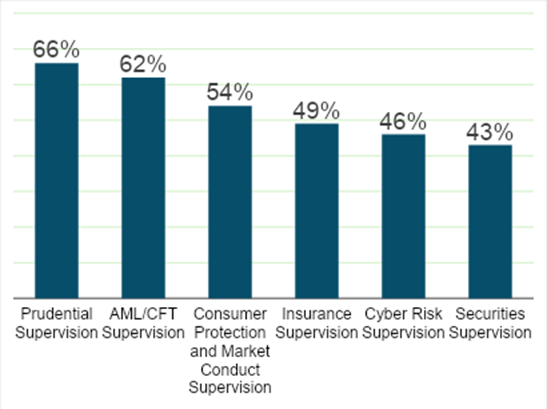
According to CCAF, the most common supervisory use cases cover the following areas: 

  • Prudential supervision [66% of the surveyed supervisors]  
  • AML/CFT supervision [62% of the surveyed supervisors]  
  • Consumer protection and market conduct supervision [54% of surveyed supervisors]  

Other areas that are also using SupTech tools include insurance supervision, cyber-risk supervision, and securities supervision:  
 

However, to fully benefit from SupTech, supervisors must treat it as a strategic investment that extends beyond just acquiring new technology tools. Success requires a comprehensive digital transformation strategy, a robust data governance framework, and a clear, process-focused SupTech plan that is supported by senior leadership.
Critically, the decision and implementation of SupTech must be aligned with the workforce strategy and a shift towards an organisational culture that fosters innovation. Ultimately, SupTech serves as a powerful catalyst but cannot replace the essential foundation of a strong, risk-based supervisory approach.

Let’s explore how SupTech can be leveraged by supervisors and supervisory authorities. 


If you have trouble playing this video, you can access an alternative player here.

Click to view the transcript.

You now have an understanding of the need to make strategic decisions about SupTech investments. You should also be aware of how SupTech relates to broader digitalisation strategies and data reform strategies.  

In the next section, we look at specific opportunities and challenges created by AI-powered SupTech tools. 

Additional Reading:

The following sources were consulted in preparing this video. We suggest that you include these as additional reading as you proceed through this course.  

Reflection Questions for Discussion

Think about a significant pain point or inefficiency in your current supervisory process: 

  1. What is one SupTech application that could address it? 
  2. More importantly, what is the most critical non-technological change—whether in your team’s skills, internal culture, or existing workflows—that would be required to ensure that technology implementation succeeds?
En réponse à Premier message

Re: Leveraging SupTech

par Mariam Nansubuga, Group 4
1. One pain point could be that the Bank relies on periodic returns and scheduled on-site examinations to oversee a fast-moving Digital Financial Services market. By the time risks are identified and acted upon, harm to consumers or market stability may already have occurred hence there is a mismatch between the supervisory model and the speed of digital finance. A SupTech application that could address this is an automated DFS Risk Scoring and Early Warning Tool that does real-time analysis of transaction and complaints data and detects probability of a risk occurring before it actually does to enable the Bank to intervene earlier.

2. The most critical non-technological change is building genuine data literacy and analytical culture within BoU's supervisory workforce. The staff should be able understand and act on the output given by these SupTechs.
En réponse à Premier message

Re: Leveraging SupTech

par LEILAH ABDALAH MUBEYA, Group 6
1. A centralized digital regulatory reporting and analytics platform would enable FSPs to submit standardized, machine readable reports with automated validation, improving data quality, flagging gaps in gender and demographic-disaggregated data, and allowing the Supervisor to analyse financial inclusion trends more efficiently.
2. The most critical non-technological change is strengthening data and analytics capacity and fostering a data-driven supervisory culture through staff upskilling in data analysis, gender and financial inclusion insights, and risk-based supervision, changing how people work so detailed data is actually used to guide supervision and policy decisions.
En réponse à Premier message

Re: Leveraging SupTech

par Michael Sserwanga Sserwanga, Group 4
A significant pain point in my current supervisory process is the heavy reliance on the manual review of the regulatory returns(financial submissions). Also, data is often submitted in static formats and analysed retrospectively (1 month to 3 months back), which limits our ability to identify emerging risks in real time and creates inefficiencies in risk prioritisation.

I think One Sup Tech application that could address this challenge is the implementation of an automated dashboard that consolidates regulatory reporting into a centralized system with built-in risk indicators and anomaly detection, eliminating the need for manual review

However, the most critical non-technological change required for successful implementation would be strengthening the analytical capacity within the teams, and also adjusting the workflows (the way things are done) to include data driven insights into supervisory decisionmaking.
En réponse à Premier message

Re: Leveraging SupTech

par Sheena Rebecca Nantumbwe, Group 4
1.Although the BSA collects data effectively, a key gap is the limited use of that data for proactive supervisory insights. An advanced analytics and risk-scoring tool could enhance decision-making by generating early warnings and risk indicators.

The most critical non-technological change would be building staff capacity and a data-driven culture, ensuring that we can integrate data insights into planning and supervisory actions so the technology is fully utilized.
En réponse à Premier message

Re: Leveraging SupTech

par Usman Bayero , Group 1
1. A centrilised digital reporting portal with automated data validation and dashboard would be a good example to collect gender disintergrated data directly from FSPs and flag incosistencies in realtime.
2. Building internal analytical capacity and a data drive culture, supervisors/regulators must be trained to interpret disintergrated data and intergrate insights into decision making, otherwise the technology will not deliver real impact.
En réponse à Premier message

Re: Leveraging SupTech

par Aboo Badhasa Aboma, Group 2
1. The SupTech Solution: Automated Data Validation and "Smart" Dashboards
I would propose an Automated Data Intake and Validation Portal (via APIs). Instead of supervisors manually opening email attachments, this tool automatically pulls data directly from FSPs, runs it against pre-defined validation rules (e.g., checking for outliers or missing fields), and populates a Real-time Risk Dashboard. This allows supervisors to instantly see which firms are "flashing red" for liquidity or compliance issues, shifting their role from "data janitors" to "risk analysts."

2. The Critical Non-Technological Change: A Culture of "Risk Appetite" and Data Literacy
The most critical change is a shift in internal culture from a "Checklist" mindset to a "Risk-Based" judgment mindset. Technology can flag an anomaly, but it cannot tell you if that anomaly is a sign of a systemic fraud or a harmless operational glitch. To succeed, the team needs:
Upmarket Skills: Moving beyond basic Excel to data storytelling and forensic analysis.
Workflow Integration: Changing internal procedures so that "the dashboard says so" is a valid trigger for an inspection, rather than waiting for a scheduled annual visit.
Management Support: Leadership must trust automated alerts and empower staff to act on them, even if it disrupts traditional, predictable schedules.
En réponse à Premier message

Re: Leveraging SupTech

par AISHA UMARU HADEJIA, Group 1
One useful SupTech application would be a centralized digital reporting platform with built in validation and dashboards. It would let financial service providers submit standardized demographic data, automatically flag errors or missing fields, and give supervisors real time insights into inclusion trends while protecting customer privacy.
En réponse à Premier message

Re: Leveraging SupTech

par Faith Fxentirimam Envuladu, Group 1
1. The manual process of reviewing extensive datasets to check compliance for supervisory activities creates a major compliance challenge for organizations that need to examine their complete operational data. The process requires extensive time to complete, yet it also invites mistakes by workers, which results in the delayed discovery of unresolved problems. The AI-powered monitoring system functions as a SupTech application by automatically monitoring transaction data to identify suspicious activities, which it then reports to supervisors as alerts. The complete supervisory team must receive comprehensive training about the required non-technological changes, which serve as the main requirement for success

2. Critical Non-Technological Change: Enhanced Data Literacy and Communication. The most essential non-technological change that needs to be implemented for success requires organizations to improve the data literacy skills of their employees while they develop better communication systems. Team members need to be trained to interpret the software's output effectively and understand the implications of the identified discrepancies. The organization needs to create effective communication routes that will enable teams to work together on problem-solving while also tracking their progress on issue resolution. The team requires ongoing development through scheduled training sessions and workshops, which will deliver essential upskilling resources.
En réponse à Premier message

Re: Leveraging SupTech

par Sarim Ali, Group 5
One major pain point is the manual review of regulatory returns, which makes it difficult to detect trends or emerging risks in a timely manner. A SupTech dashboard with automated data validation and risk flagging could significantly improve off-site monitoring and early warning capabilities.

However, the most critical non-technological change would be building analytical capacity and shifting the team’s mindset toward proactive, data-driven supervision. Without stronger data literacy and a culture that trusts and uses data in decision-making, the technology would not deliver its full value.
En réponse à Premier message

Re: Leveraging SupTech

par Erah, Dominic Ose Erah, Group 1
1. One SupTech application that could address a major supervisory pain point, such as delayed and inconsistent compliance submissions is an automated data-validation and anomaly-detection tool that flags breaches and data-quality risks in real time
2.The most critical non-technological change required is strengthening staff data-literacy and analytical skills while fostering a culture that embraces data-driven supervision and process discipline, ensuring that technology is fully adopted and sustainably integrated into existing workflows.
En réponse à Premier message

Re: Leveraging SupTech

par Muhammad Nabeel Akhtar Akhtar, Group 5
A key inefficiency in our supervisory process is that majority of our regulatory returns are assessed and analyzed manually, without a centralized data analysis system / dashboard. This runs the risk of missing important linkages and early warning indicators. An entity-wide SupTech solution to automate data aggregation and risk dashboarding could be used to address this issue and enhance supervisory efficiency. It is important however to note that such a system requires system-wide overhaul and would only be effectively implemented if it has the buy-in of the organization from top to bottom.
En réponse à Premier message

Re: Leveraging SupTech

par KABIRU MUDASHIRU, Group 1
1. One of the pain points in our current process is that returns submissions by the financial service provider are a push mechanism, with the institution initiating them. A suptech application that supports a pull mechanism, allowing data to be pooled at predetermined times and frequencies, would go a long way toward improving regulatory oversight and market conduct analysis. The regulator won't have to wait until the end of the day to get the daily return, or until the end of the month to get the monthly return of activities.
2. The most critical non-technological change is the ability to generate meaningful insight from data.
En réponse à Premier message

Re: Leveraging SupTech

par Rehan Masood, Group 5
One major pain point in the supervisory process is the heavy reliance on manual review of regulatory reports and incident notifications submitted by regulated institutions. Supervisors often spend significant time reading large volumes of documents, identifying patterns, and determining whether an issue requires escalation. This process is slow and sometimes inconsistent because the quality of analysis depends on individual reviewers and the time available to them.

A useful SupTech application could be an artificial intelligence based system that automatically analyzes supervisory returns, incident reports, and other regulatory submissions. The system could use natural language processing to identify risk indicators, detect anomalies, and flag institutions that show unusual patterns of operational, cyber, or financial risk. This would allow supervisors to move from manual document review toward a more risk focused and data driven supervisory approach.

However, the most critical requirement for success is not the technology itself. The key change would be building stronger analytical and data literacy skills within the supervisory team. Supervisors must become comfortable interpreting automated risk indicators, validating algorithmic outputs, and integrating these insights into supervisory judgment. Without this shift in skills and mindset, there is a risk that the technology will either be underused or blindly trusted without proper oversight.

Equally important is adjusting existing workflows so that supervisory decisions are supported by data insights rather than traditional manual review practices. If supervisors continue to rely on old processes while the new technology operates separately, the benefits of SupTech will not fully materialize. Successful implementation therefore depends as much on cultural and skill transformation as it does on the technology itself.
En réponse à Premier message

Re: Leveraging SupTech

par Elsabet Assefa , Group 2
1. One Sup Tech application that could address it:
Automated data collection, processing, and analysis tools that would automate reporting from providers, enable proactive analysis, reduce manual work, and support richer supervisory insights.
2.The most critical non-technological change required for success
Fostering a culture of innovation across the organization. This includes strong senior leadership driving change management, breaking departmental silos for cross-functional collaboration, encouraging experimentation and openness to new workflows, and shifting from the routine manual tasks to analytical risk-based supervision. this is because it is emphasized that Sup Tech requires broad cultural mobilization and process reinvention to overcome resistance, ensure buy-in, and maximize benefits beyond just tools or skills. Without this, even advanced tech risks underutilization in legacy-heavy environments.
En réponse à Premier message

Re: Leveraging SupTech

par Agaba Albert Busingye Agaba, Group 4
A pain point or inefficiency in the current supervisory processes are the review of historical returns, financial statements, previous onsite examination reports, auditors' reports for the assessment of an institution's performance. The one Sup Tech application that considers or involves a process-focused approach to quickly flag-off any bleaches or alerts and more dynamic strategy and continuously updated of the advancing technologies, regulations and laws to facilitate supervisors and institutions receive immediate assessment and risks in the sector.

The most critical non-technological change would be change in culture of the way supervisors analyze or review performance of regulated institutions and continuous training in data analytics, advancing technologies and their risks and knowledge of emerging or old risks and adequate communication to the regulated institutions.
En réponse à Premier message

Re: Leveraging SupTech

par Aliyu Mohammed, Group 1
A fully automated complaints management system that communicates with the operators for update of complaint resolution status will surely address our pain point of long turnaround times for complaint resolution.
However, the new system must be deployed after instituting a proper change management to address cultural issues that allow silo operations amongst supervisors and general resistance to change, no matter how good it seems.